
If your building is already wired for data and VoIP, you can run IP loudspeakers over the same Cat5e or Cat6 cabling. The two things that make it possible are Power over Ethernet (PoE) and IP audio. Here is how it actually works, what you need, and when it is still smarter to use traditional 70V distributed audio.
Multi-floor offices have a specific problem. The lobby needs upbeat music that fits the brand. The quiet floor needs almost nothing. The cafeteria needs its own mix. Announcements need to reach everyone, but only when they are supposed to. One system should handle all of it without creating a mess of volume knobs on every wall.
Reverberant spaces are among the most challenging environments for audio system design. Churches, airport terminals, train stations, and corporate atriums are often large, open, and finished in hard, reflective materials, exactly the conditions that make speech hard to understand. At the same time, many of these spaces are required to meet a high Speech Transmission Index (STI) for emergency announcements and voice evacuation, and architectural design often limits where loudspeakers can even.
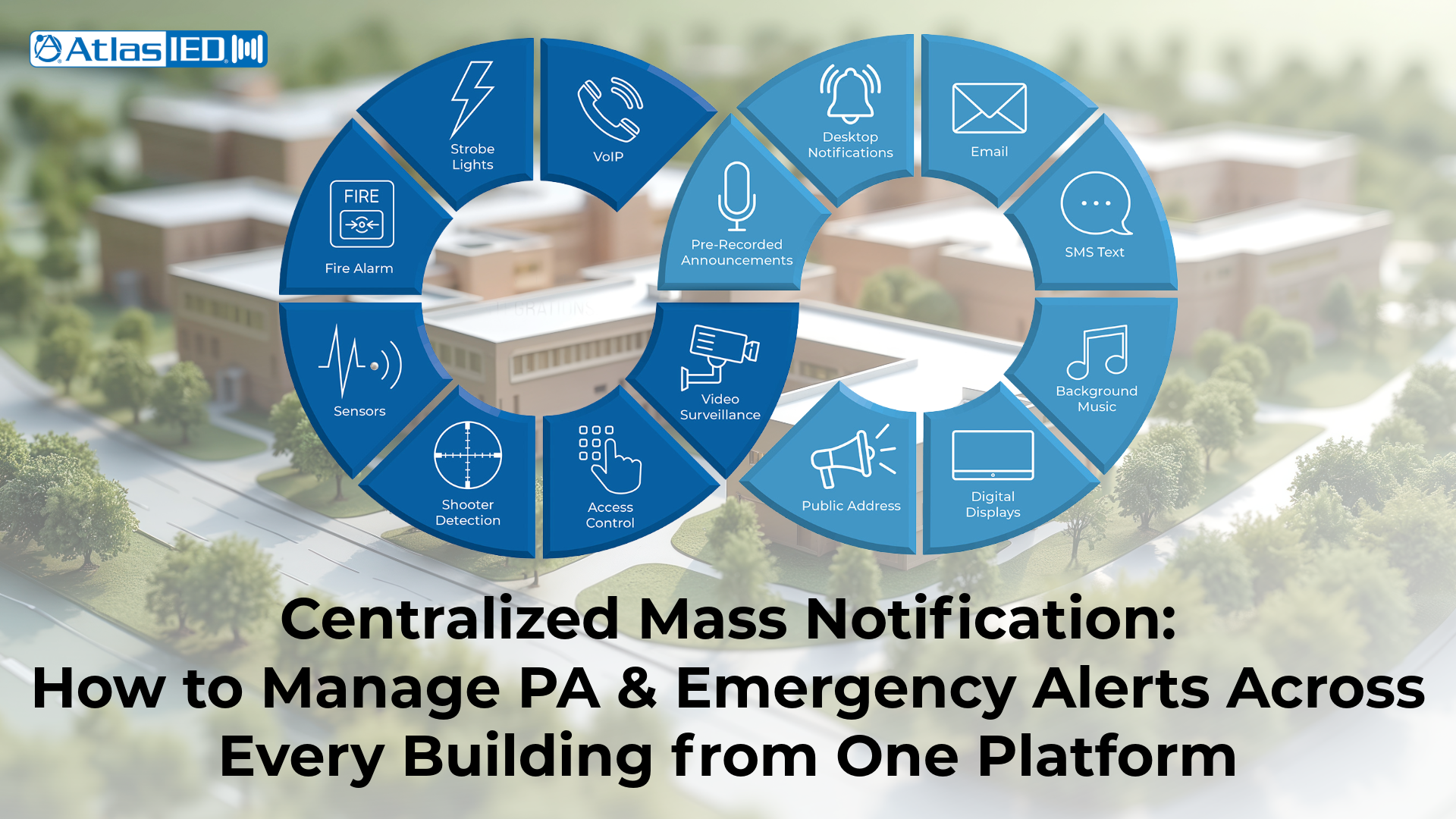
If your organization has more than one building—a campus, hospital system, chain of facilities, or transit network—you need a reliable way to manage paging, scheduled announcements, and emergency alerts across every site. In many facilities, that same communications strategy may also coordinate with background music, intercom, digital signage, access control, and other building systems.
When facilities teams evaluate sound masking, the conversation usually starts subjectively — “the office is too distracting” or “we need more privacy in this clinic.” The conversation should end objectively. Two measurable metrics — the Articulation Index (AI) and its complement, the Privacy Index (PI) — let acousticians prove whether a space is actually private or not, and whether a sound masking system has done its job.
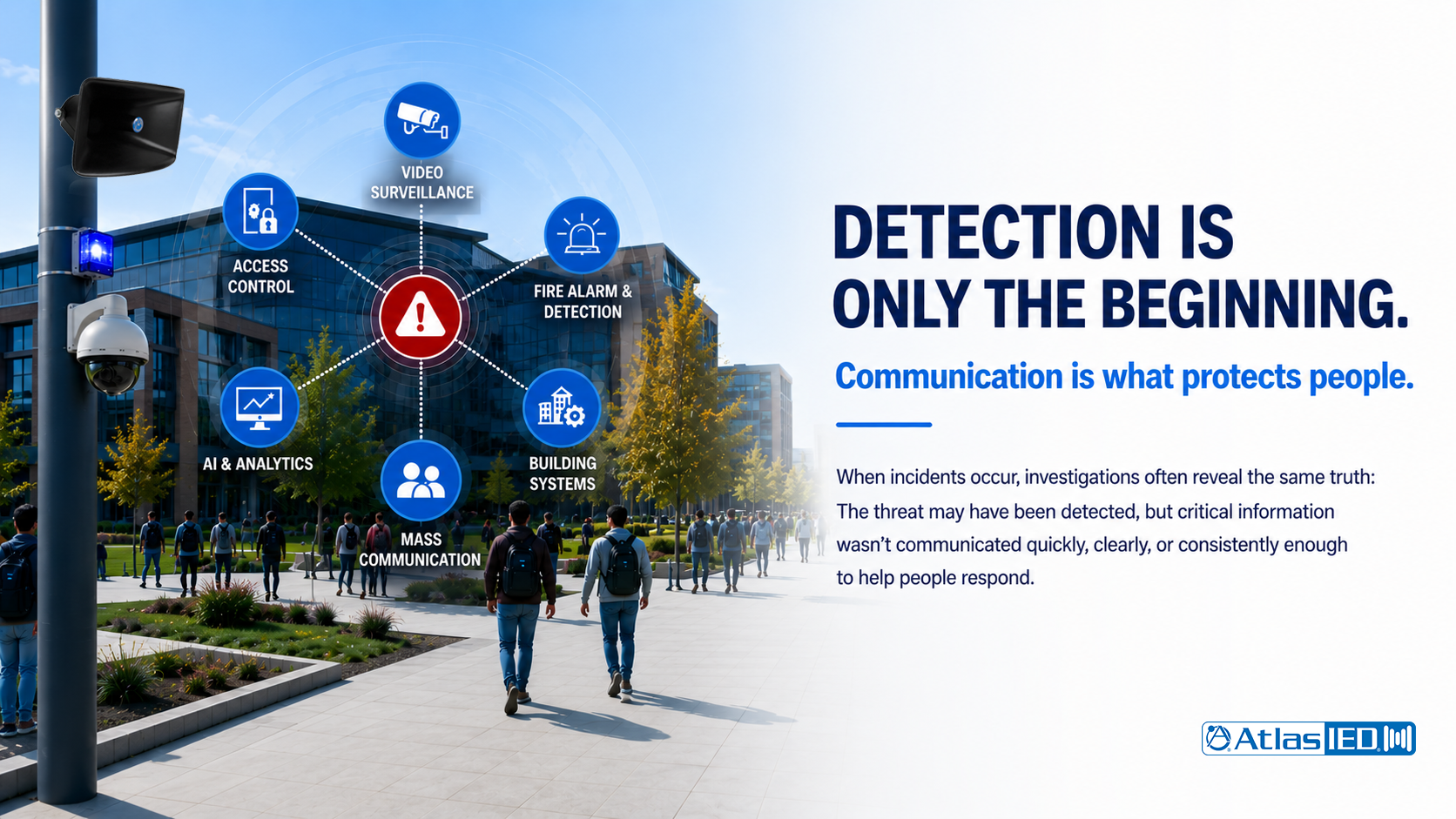
On a busy campus, silence is rare. Classroom discussions, hallway traffic, machinery, HVAC systems, and outdoor activity all contribute to constantly changing ambient noise levels. In these environments, one of the biggest challenges for safety and communication systems isn’t delivering a message. It’s ensuring that message is heard and understood.
From public address systems and IP-based solutions to mass notification and life safety platforms, mission-critical technology plays a vital role in keeping people informed and protected. These communication systems must operate reliably at all times. Proactive assurance plans help reduce downtime, maintain performance, and protect long-term investments beyond a standard warranty.
When you’re designing a commercial audio system, one of the most important decisions you’ll make is how to structure the core electronics. Should you use a powered DSP (a DSP with built-in amplification)? Or do you build around a separate DSP and amplifier architecture? That choice affects how quickly the system installs, how easy it is to expand later, and how reliably it performs over time. Pick the wrong approach and you can end up with bottlenecks, workarounds, or expensive redesigns.
Martyn’s Law, or the Terrorism (Protection of Premises) Bill, aims to ensure UK venues are prepared for terror threats. Named after Martyn Hett, a victim of the 2017 Manchester bombing, the law requires certain public venues to improve security and preparedness. While navigating these requirements can be challenging, AtlasIED offers solutions to help organizations comply and enhance safety.