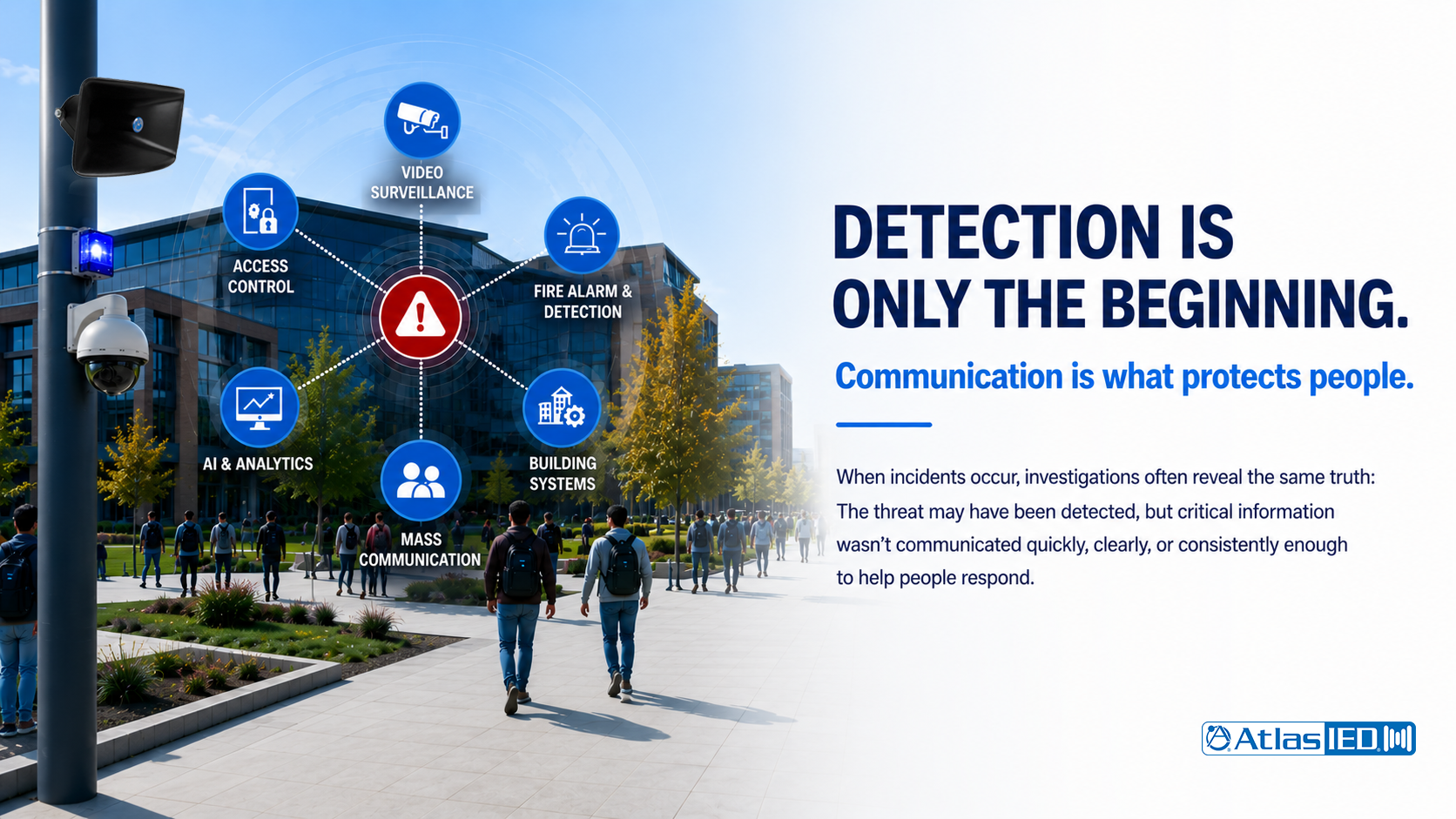
Across campuses of all sizes, organizations continue investing heavily in physical security. Video surveillance, access control, AI-powered analytics, intrusion detection, and monitoring technologies have become foundational components of modern security strategies.
Every K-12 district faces the same three-part communication challenge: reliable daily paging, integrated safety alerts, and a network of endpoints that can grow with the district. The best IP-based paging and mass notification systems solve all three at once. This guide walks through what to look for in 2026 and how to evaluate the top options.
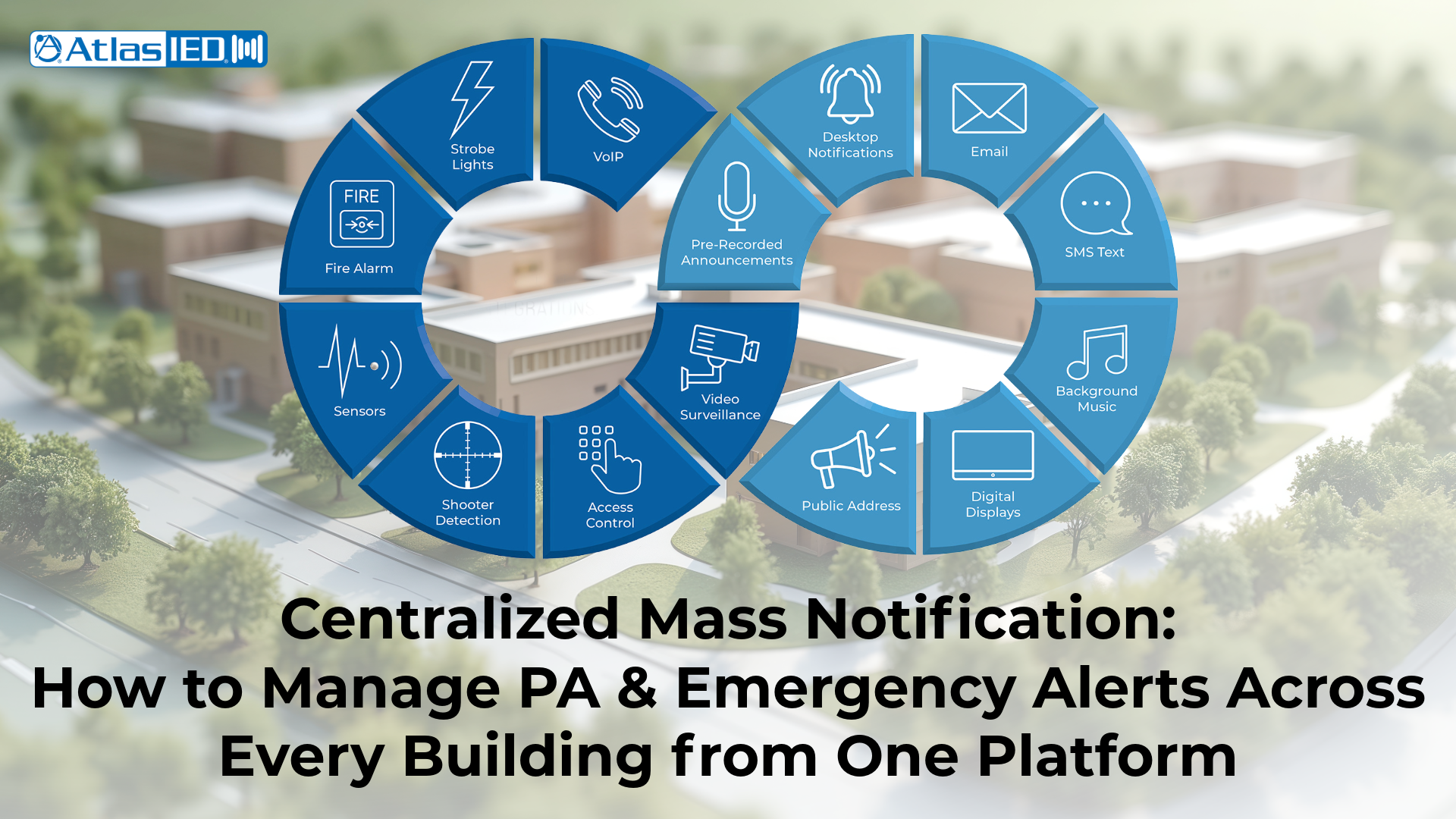
If your organization has more than one building—a campus, hospital system, chain of facilities, or transit network—you need a reliable way to manage paging, scheduled announcements, and emergency alerts across every site. In many facilities, that same communications strategy may also coordinate with background music, intercom, digital signage, access control, and other building systems.
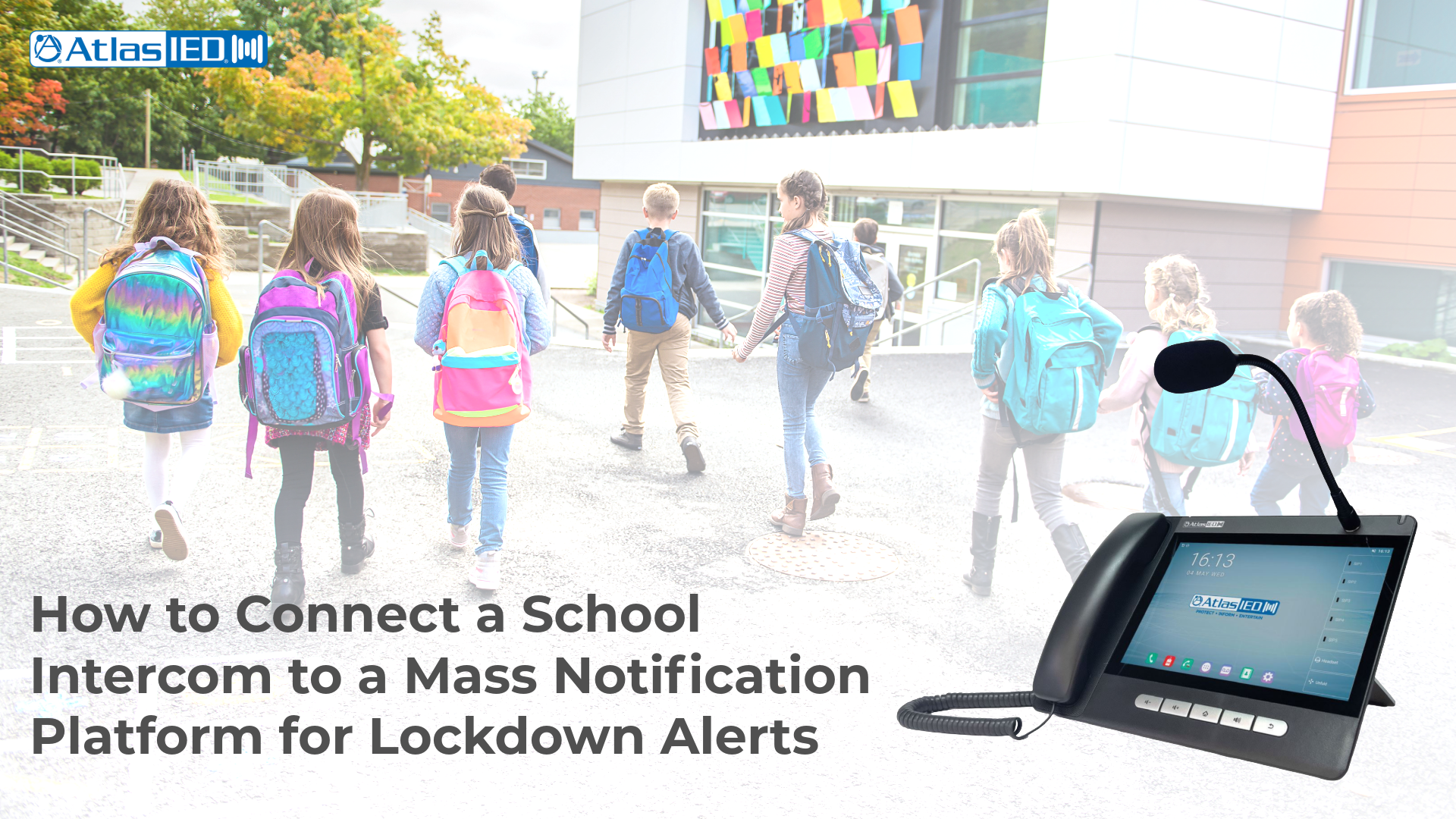
Most K-12 schools already own a working intercom system. What many do not have yet is a reliable way to connect that intercom to a modern mass notification platform so an approved trigger—such as a panic button, office console, or integrated alert workflow—can initiate a building-wide lockdown message and related notifications. Closing that gap is one of the highest-impact safety projects a district can take on, and in many cases it does not require ripping out the existing intercom.
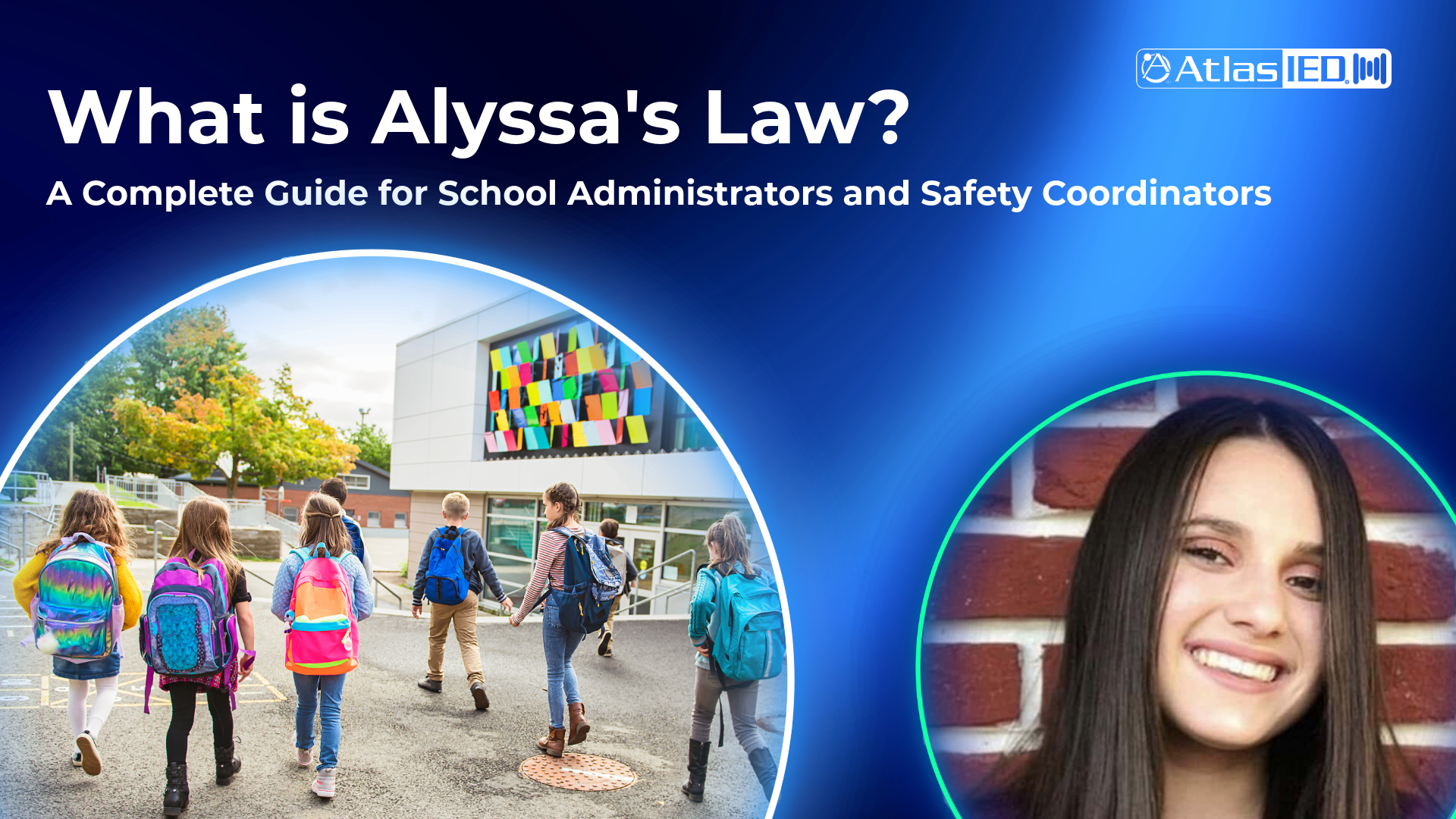
Alyssa’s Law is state-level legislation that generally requires, authorizes, or funds silent panic alarm systems for schools. Depending on the state, those systems may be required to alert a 9-1-1 center, local law enforcement, or another approved emergency response point. The goal is simple: shorten the time between the moment an emergency is recognized and the moment help is on the way.
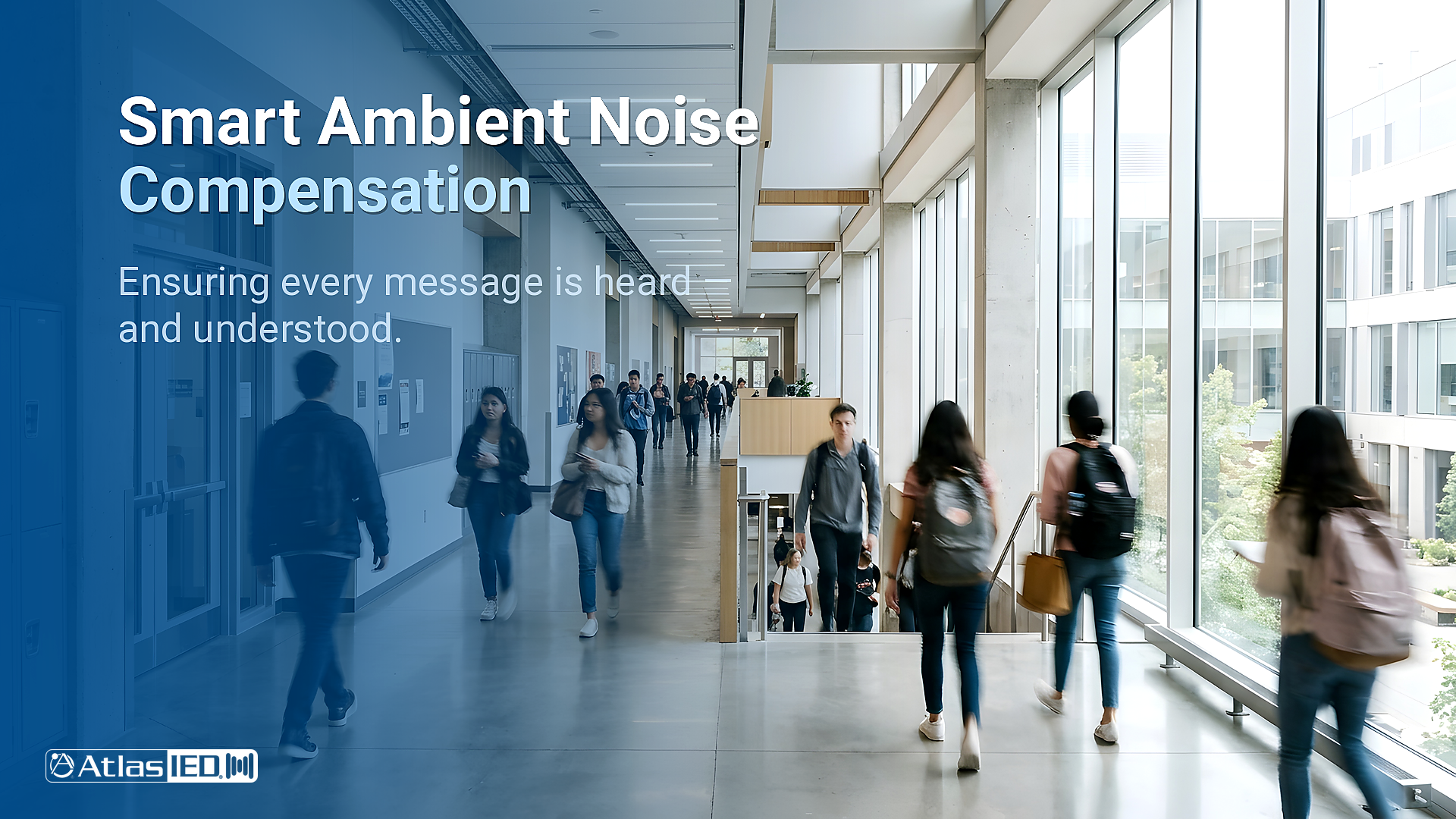
On a busy campus, silence is rare. Classroom discussions, hallway traffic, machinery, HVAC systems, and outdoor activity all contribute to constantly changing ambient noise levels. In these environments, one of the biggest challenges for safety and communication systems isn’t delivering a message. It’s ensuring that message is heard and understood.
In an emergency, time is the most critical variable. The faster a situation is identified, communicated, and acted upon, the greater the opportunity to protect lives and minimize harm. Yet in many facilities, especially across K-12 education, healthcare, industrial, and large campuses, there’s still a gap between when an incident begins and when the right people are alerted. That gap is where risk lives.
From public address systems and IP-based solutions to mass notification and life safety platforms, mission-critical technology plays a vital role in keeping people informed and protected. These communication systems must operate reliably at all times. Proactive assurance plans help reduce downtime, maintain performance, and protect long-term investments beyond a standard warranty.
When you’re designing a commercial audio system, one of the most important decisions you’ll make is how to structure the core electronics. Should you use a powered DSP (a DSP with built-in amplification)? Or do you build around a separate DSP and amplifier architecture? That choice affects how quickly the system installs, how easy it is to expand later, and how reliably it performs over time. Pick the wrong approach and you can end up with bottlenecks, workarounds, or expensive redesigns.