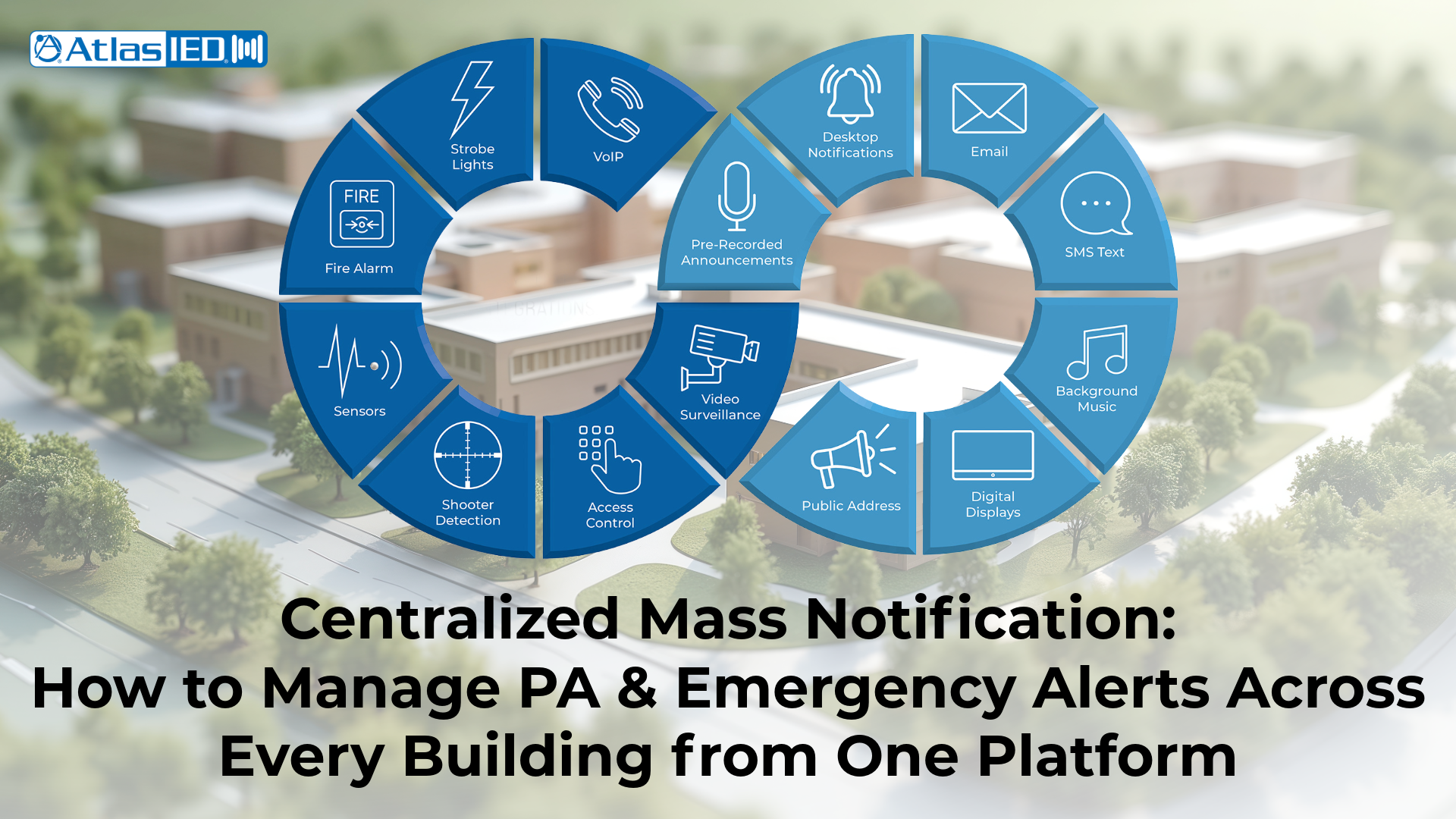
If your organization has more than one building—a campus, hospital system, chain of facilities, or transit network—you need a reliable way to manage paging, scheduled announcements, and emergency alerts across every site. In many facilities, that same communications strategy may also coordinate with background music, intercom, digital signage, access control, and other building systems.
In an emergency, time is the most critical variable. The faster a situation is identified, communicated, and acted upon, the greater the opportunity to protect lives and minimize harm. Yet in many facilities, especially across K-12 education, healthcare, industrial, and large campuses, there’s still a gap between when an incident begins and when the right people are alerted. That gap is where risk lives.
From public address systems and IP-based solutions to mass notification and life safety platforms, mission-critical technology plays a vital role in keeping people informed and protected. These communication systems must operate reliably at all times. Proactive assurance plans help reduce downtime, maintain performance, and protect long-term investments beyond a standard warranty.
When you’re designing a commercial audio system, one of the most important decisions you’ll make is how to structure the core electronics. Should you use a powered DSP (a DSP with built-in amplification)? Or do you build around a separate DSP and amplifier architecture? That choice affects how quickly the system installs, how easy it is to expand later, and how reliably it performs over time. Pick the wrong approach and you can end up with bottlenecks, workarounds, or expensive redesigns.
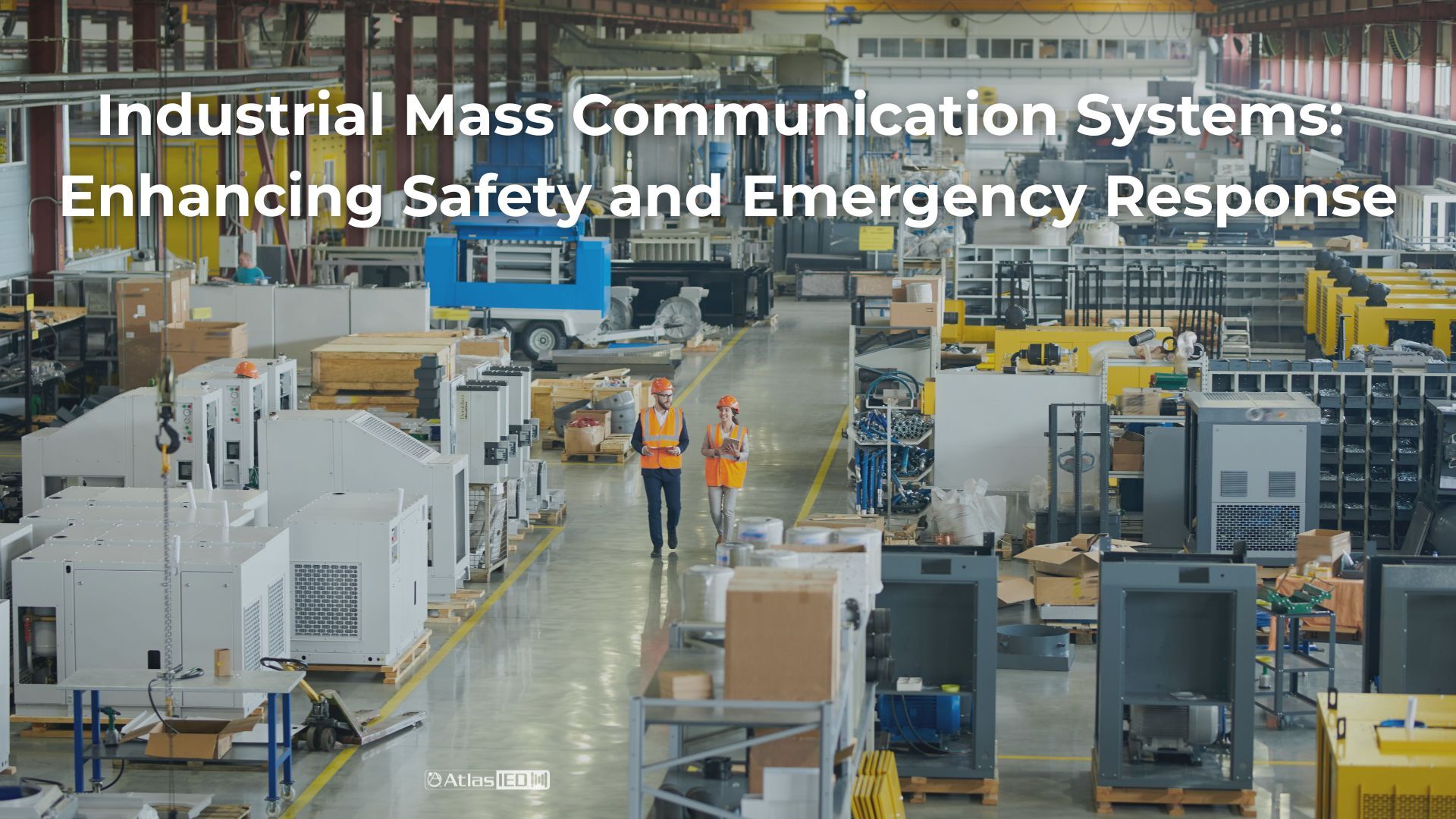
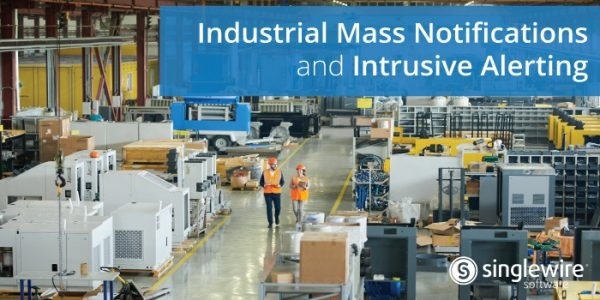
In today's fast-paced industrial environments, effective communication is crucial for ensuring safety, operational efficiency, and regulatory compliance. Mass communication technologies play an indispensable role in disseminating critical information swiftly and accurately across large, often noisy, and complex facilities. These systems are designed to alert employees of emergencies, safety protocols, and operational updates, thereby minimizing response times and enhancing overall safety.
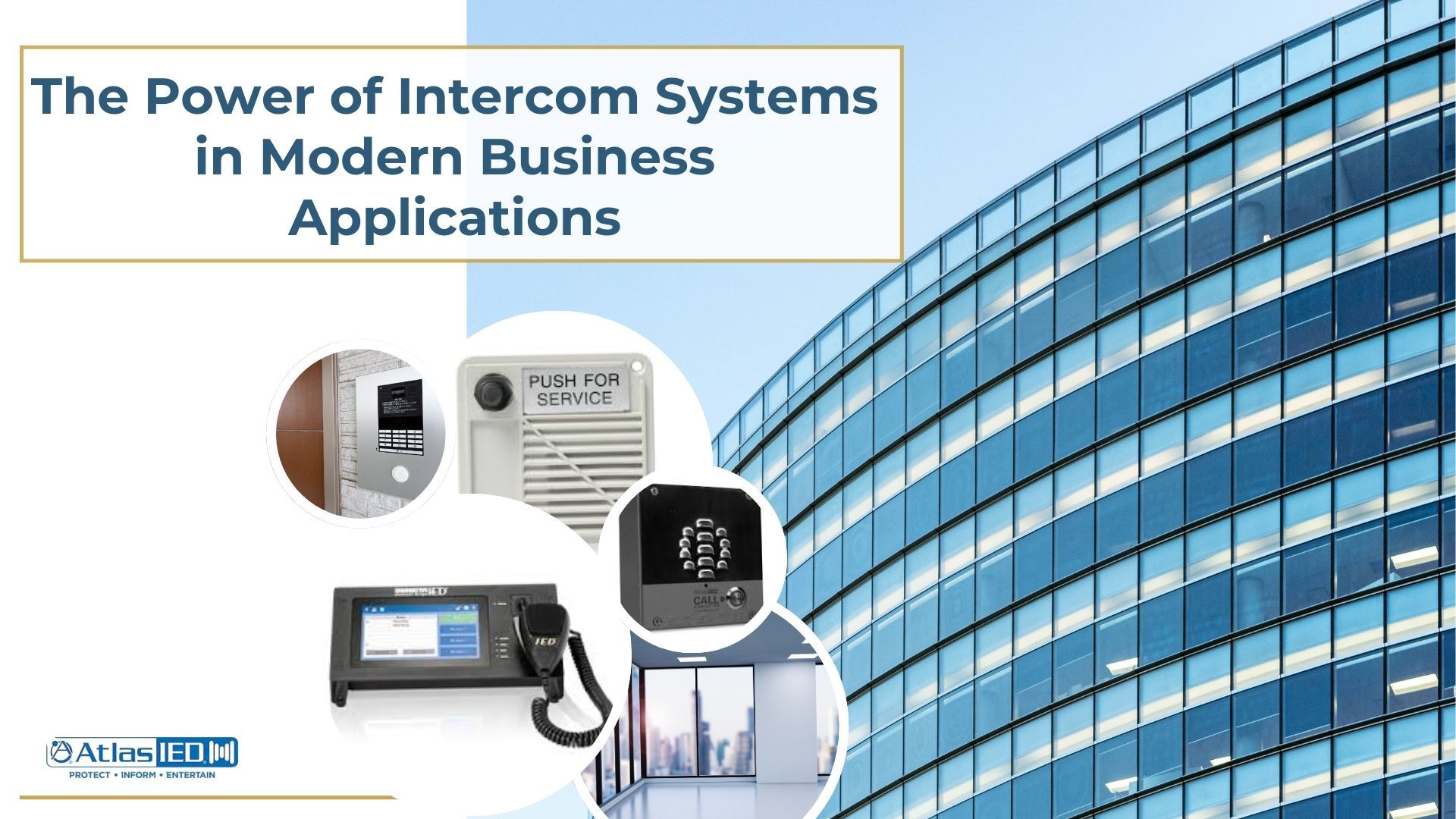
Modern IP-based intercom systems bolster business operations by enabling real-time two-way video/audio communication, enhancing access control, emergency alerts, and situational awareness. They streamline internal workflows—from paging and customer service to zoned announcements—while integrating seamlessly with security, mass-notification, and access systems. This scalable, high‑clarity solution supports diverse sectors like corporate, healthcare, transportation, and education.
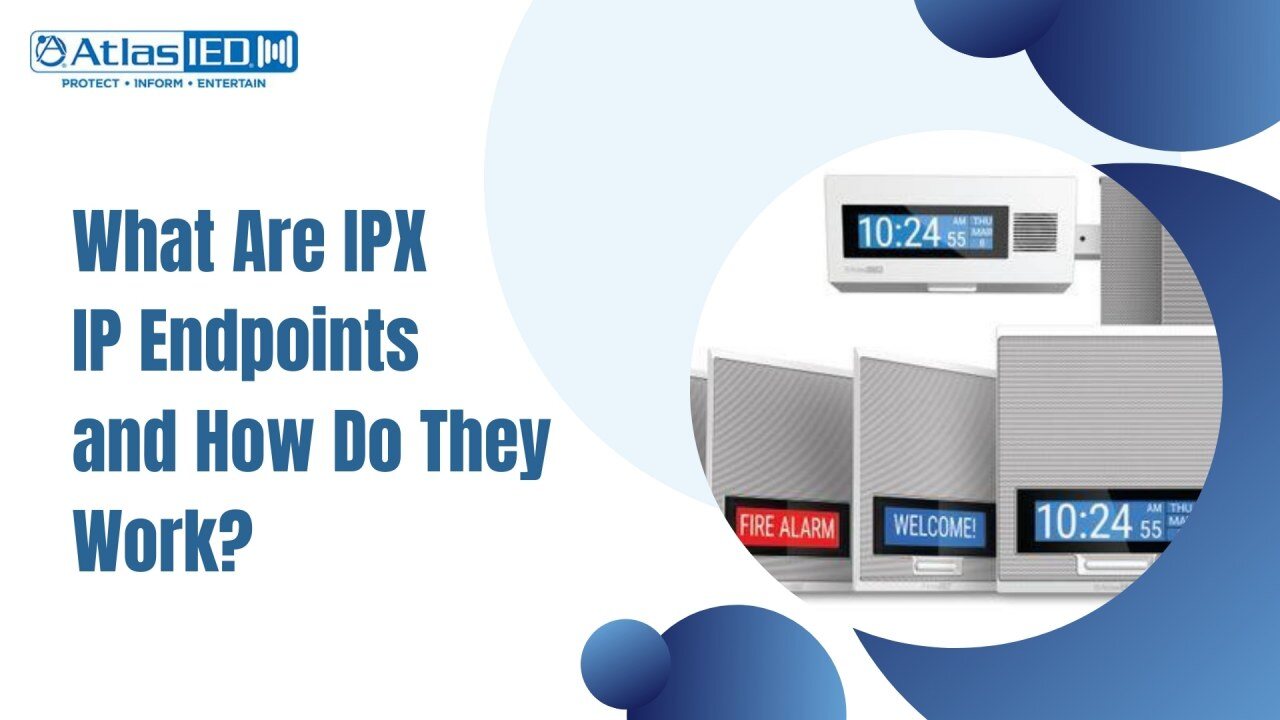
IPX endpoints are network-connected audio/visual IP devices used in mass communication systems in schools, healthcare, and industrial environments to deliver critical messages, alerts, and intercom functionality via speakers, LCD displays, LED flashers, and microphones. They auto-register with systems like InformaCast, offer high speech intelligibility, visual ADA-compliant cues (color/text/flashing), and integrate seamlessly with existing infrastructure.
Imagine walking into a trendy bar on a Friday night. The ambiance is perfect, the lighting is just right, and the décor exudes sophistication. Yet, as you sit down with your friends to enjoy a well-deserved drink, you find yourself leaning in closer, straining to hear the conversation, and yelling your responses. The reason? The background music is blasting at an unbearable volume, turning what should be a relaxing evening into a stressful shouting match.
In any industrial environment, safety is paramount, but the noise of machinery, the focus required to carry out tasks, and the need for split-second decision-making can make it challenging to grab a worker’s attention when an emergency strikes. Heads are down, ear plugs are in, and trying to deliver a message can be next to impossible without the right tools. This is why industrial mass notifications can be a critical component of any manufacturer’s safety plan.