Did you know that 25% of campuses rely on just one emergency alert system, while 3% have none at all? Explore why integrating multiple communication methods is crucial for comprehensive campus safety.
Explore how essential businesses adapted to the "new norm" during the pandemic, implementing innovative communication strategies to protect, inform, and entertain. Learn about the pivotal role of mass communication systems in maintaining safety and efficiency in challenging times.
There is a myth in the security industry that many integrators believe to be true. It’s that you need very specific proprietary lines and specific expertise and particular skills to install and maintain critical communication systems in education and healthcare customers. Nothing could be further from the truth…
The recently signed Infrastructure Bill will impact our industry in many ways. For five years, the bill provides $25B for airports alone, $39B for public transit, and $66B for passenger and freight rail. This allocation will manifest new builds, renovations, and expansions – which will include technology, both security and audiovisual. Projects that were allocated funds in 2019-2020 but were put on hold during the pandemic will restart. Other new projects will find pathways to planning, design,.
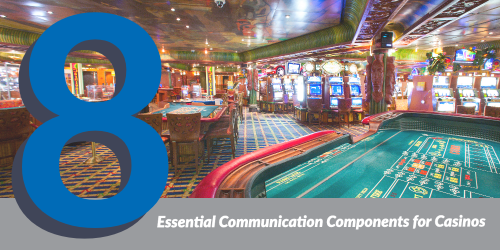
Many variables can make effective communication with casino guests and employees difficult. Consistently high levels of ambient noise, expansive square footage comprising a variety of acoustical environments, and plentiful audible and visual distractions can test the effectiveness of mass communication systems. Factor in the need for audio to serve many different purposes–as a way to relay emergency alerts and notifications, dispatch routine announcements, and evoke ambiance through background.
Audiovisual, security, and tech rich systems are unique in their complexity and the rate at which the technology evolves. While expertly trained, integrators can sometimes be challenged by project timelines, product availability, interconnecting brands, and scope creep. More than ever, integrators should consider manufacturer services as a seamless part of their project support. AtlasIED’s own Thomas Ahern, Design Services & Tech Support manager, explains how our integrator partners can.
Adaptive sound masking, which adjusts masking noise levels in response to ambient sounds, may inadvertently draw attention to the masking system itself, leading to increased distractions and reduced speech privacy. Consistent sound masking is more effective, as it remains unobtrusive and maintains a stable acoustic environment.
As a global manufacturer of audio and communications technologies, MiTek Corporation, parent company of AtlasIED, has facilities on four continents. In addition to the commercial audio, MiTek also manufactures car audio, powersports technologies, residential audio, and OEM products for some of the biggest companies in their respective fields. These additional divisions of MiTek provide added resources, manufacturing methods, and quality standards that have been implemented into AtlasIED.
Before people were working from home, noise distractions and lack of speech privacy negatively impacted productivity in all office environments. That has not changed.
In 2020, restaurants were forced to close dining rooms and pivot to contactless methods of serving their customers. As an article from Hospitality Technology points out, they did an amazing job in adapting their business models. But now on a path to recovery, restaurant technology professionals say these contact solutions will stick around and continue to be used post-pandemic.