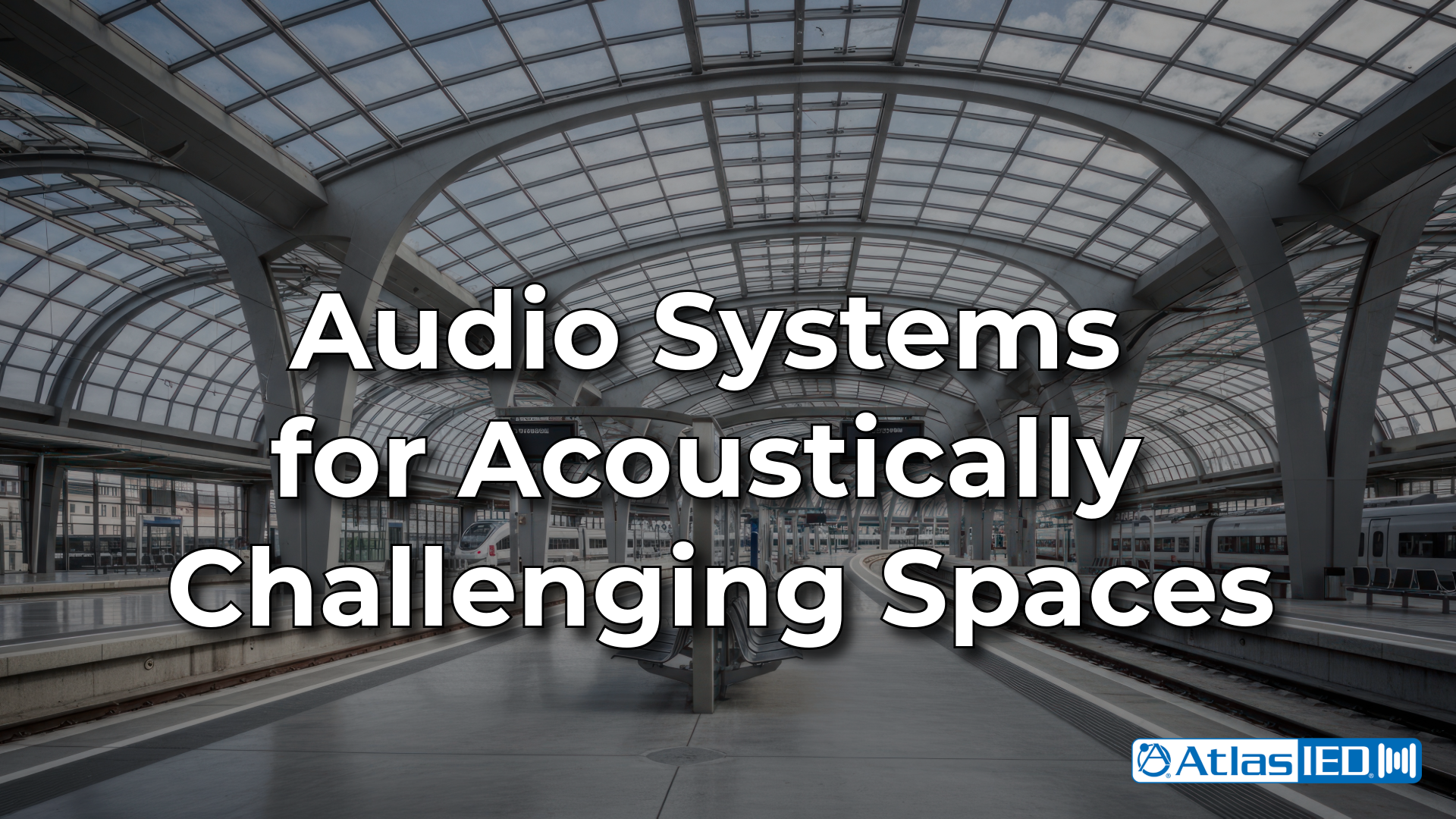
Reverberant spaces are some of the hardest environments to design audio for. Churches, airport terminals, train stations, and corporate atriums are often large, open, and finished in hard, reflective materials, exactly the conditions that make speech hard to understand. At the same time, many of these spaces are required to meet a high Speech Transmission Index (STI) for emergency announcements and voice evacuation, and architectural design often limits where loudspeakers can even go.
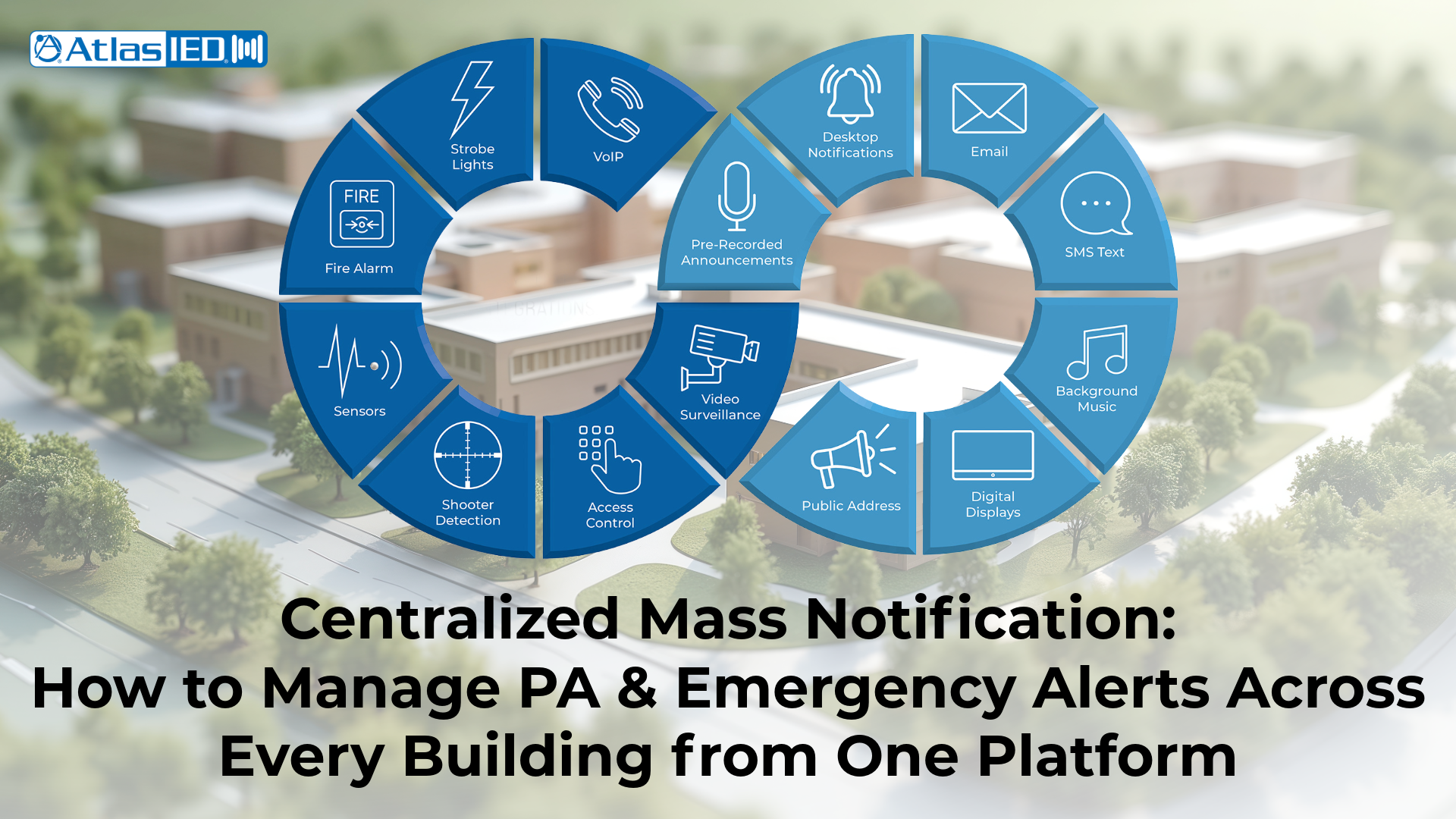
If your organization has more than one building—a campus, hospital system, chain of facilities, or transit network—you need a reliable way to manage paging, scheduled announcements, and emergency alerts across every site. In many facilities, that same communications strategy may also coordinate with background music, intercom, digital signage, access control, and other building systems.
From public address systems and IP-based solutions to mass notification and life safety platforms, mission-critical technology plays a vital role in keeping people informed and protected. These communication systems must operate reliably at all times. Proactive assurance plans help reduce downtime, maintain performance, and protect long-term investments beyond a standard warranty.
For decades, airport announcements have remained largely unchanged: repetitive, generic, and often disconnected from the actual needs of passengers and operations. In many terminals, announcements are either delivered manually by staff with varying levels of quality or, at best, played from pre-recorded prompt voice files triggered manually by airlines or ground handlers. This fragmented approach is not only inefficient but also fails to deliver the clarity, timeliness, and personalization.
Discover how AV hardware and IP-based communication systems are reshaping modern transportation. From real-time announcements and emergency alerts to streamlined operations and improved passenger experiences, integrated AV solutions are driving safety, efficiency, and connectivity across airports, subways, and transit hubs. Learn how these technologies are shaping the future.
Martyn’s Law, or the Terrorism (Protection of Premises) Bill, aims to ensure UK venues are prepared for terror threats. Named after Martyn Hett, a victim of the 2017 Manchester bombing, the law requires certain public venues to improve security and preparedness. While navigating these requirements can be challenging, AtlasIED offers solutions to help organizations comply and enhance safety.
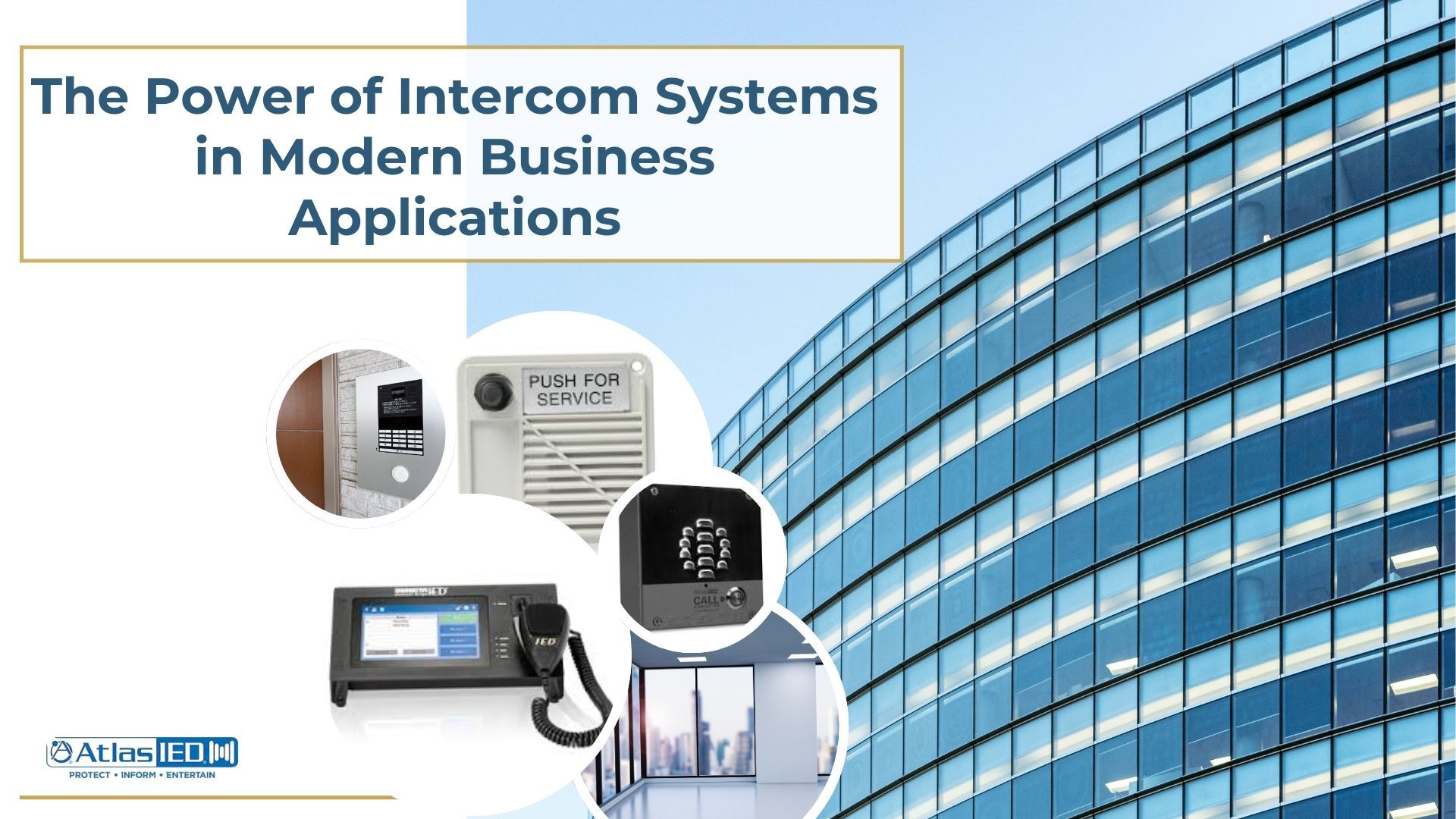
Modern IP-based intercom systems bolster business operations by enabling real-time two-way video/audio communication, enhancing access control, emergency alerts, and situational awareness. They streamline internal workflows—from paging and customer service to zoned announcements—while integrating seamlessly with security, mass-notification, and access systems. This scalable, high‑clarity solution supports diverse sectors like corporate, healthcare, transportation, and education.
AtlasIED’s AS Series loudspeakers are expertly "voiced" for a consistent, balanced sound across all models. Voicing ensures each speaker shares the same sonic signature, creating seamless, high-quality audio in multi-speaker setups. This prevents tonal mismatches and listener fatigue, delivering a harmonious experience in any space.